- Details
- Written by: Texas Authors Institute of History
- Category: Uncategorised
- Hits: 203
Greenleaf Book Group has been selected as the 2026 Lone Star Publisher of the Year for its long-standing contribution to independent publishing, its commitment to author ownership, and its ability to combine professional publishing standards with a genuinely author-centered business model. Based in Austin, Greenleaf has been operating since 1997 and has grown from a master book distributor into a full-service independent publisher and distribution company. Today, the company reports more than 4,600 books published and distributed and more than 70 New York Times, Wall Street Journal, and USA Today bestsellers—a record demonstrating that independent and hybrid publishing can compete successfully at the highest levels of the industry.
What particularly distinguishes Greenleaf is the balance it has created between professional publishing infrastructure and author independence. Its hybrid model allows authors to retain their intellectual property and creative control while gaining access to professional editorial development, design, production, marketing, branding, and national retail distribution. Greenleaf began with distribution to major bookstores, airports, and specialty retailers and has expanded that expertise into a comprehensive publishing operation. The company has also developed publishing partnerships and imprints with nationally recognized organizations including Inc., Fast Company, Family Business Magazine, and Kiplinger, demonstrating both the credibility of its operation and its ability to innovate within a rapidly changing publishing marketplace.
For the Lone Star Festival, however, this award represents more than sales numbers or bestseller lists. Greenleaf is a Texas publishing company that has spent nearly three decades helping authors turn ideas into professionally produced books while retaining meaningful control over their work. Its emphasis on quality, distribution, author entrepreneurship, and long-term career development represents many of the principles the Lone Star Festival seeks to encourage within the Texas creative community. For its sustained leadership, innovation, professional excellence, and commitment to helping authors build something larger than a single book, Greenleaf Book Group is a deserving recipient of the 2026 Lone Star Publisher of the Year Award.
Learn more about GreenLeaf Publishing here: https://greenleafbookgroup.com/
- Details
- Written by: Texas Authors Institute of History
- Category: Uncategorised
- Hits: 181

Primary audience: Young-adult and middle-grade readers, librarians, educators and children’s authors
The North Texas Teen Book Festival has developed a particularly strong reputation among participating authors and readers. It brings students to Irving for author panels, signings, book discussions and large-scale reader interaction.
One of the clearest author testimonials I found came from novelist Caragh M. O’Brien after the 2016 festival. She wrote that thinking about the event made her grin, described its energy as “off the charts,” and said she had the best time.
Other public responses repeatedly use descriptions such as “amazing,” “wonderful experience” and “a blast,” particularly regarding the panels, author access and festival staff.
The limitation is genre: this event primarily serves authors writing for children, middle-grade readers and young adults.
Learn more about this organization here: https://www.northtexasteenbookfestival.com/
- Details
- Written by: Texas Authors Institute of History
- Category: Uncategorised
- Hits: 195
Talking Animals Books, an independent bookstore in Grapevine, Texas, has been selected as the 2026 Lone Star Best Book Emporium for its commitment to readers, authors, and the independent bookselling community. With a welcoming mix of new and used books, author events, and community engagement, Talking Animals has created more than a bookstore—it has built a gathering place centered on discovery, conversation, and a shared love of books.
A major reason for the selection was its leadership in creating the North Texas Indie Bookstore Crawl. Launched in 2025 and returning for a second year in 2026, the event brings together independent bookstores across North Texas and encourages readers to visit, discover, and support locally owned booksellers. By turning neighboring bookstores into collaborators rather than competitors, Talking Animals has helped strengthen the entire regional literary community.
The Lone Star Best Book Emporium Award recognizes bookstores that actively advance reading and literary culture in Texas. Through its community presence, innovative outreach, and leadership in the North Texas Book Crawl, Talking Animals Books has demonstrated exactly that kind of impact and is a deserving recipient of the 2026 award.
- Details
- Written by: Texas Authors Institute of History
- Category: Uncategorised
- Hits: 190
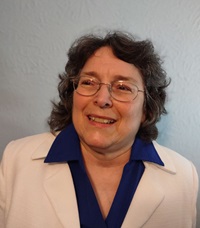
Eve Engelbrite has been writing poems and songs since she was eight. Her first poems were published when she was twelve; the same age when she wrote 4-line poems for all 50 teachers at her junior high school. Nine years later she graduated from ASU with a bachelor’s degree in Elementary Education.
Eve developed her first color-assonant reading system into the product “Color Phonics” in 1994. She wrote ten story-poems she wished to see printed, but 4-color printing was too expensive in the 90’s. After some new additions and refinements to the system, it is now called “Prism Phonics”. It applies 14 colors to letters in the text to aid pronunciation and reading. For example, blue makes the /oo/ sound in the phrase “two new blue shoes” and the underlined letters would all be colored blue.
By combining the Prism Phonics system with a rhythmic poem containing repetition, the reader can more easily see the syllables and determine the vowel sounds by color name. But wait; there’s more. Having taught in several states from coast to coast, Eve realized the great need for students learning English to have books created for them which include their native language in their native setting. The first of this series is Prism Phonics: I Love My Dad (K-2 ELD: Spanish). The setting of the story is in Mexico City and contains the English story in colorized text and the story in Spanish in normal text.
Learn more about her here and her books here: https://prismphonics.com/
- Details
- Written by: Texas Authors Institute of History
- Category: Uncategorised
- Hits: 276
You’re a Texas Author. Be Part of the Story.
Texas has a remarkable literary history—and today's authors are writing its next chapter.
The Texas Authors Museum doesn't exist only to preserve the writers who came before us. We recognize, connect, support, and preserve the work of the Texas authors creating that history right now.
When you become a member, you aren't simply buying a collection of author services.
You are joining the Texas Authors community.
Your Work Deserves a Place in Texas Literary History
You don't need to be famous.
You don't need a major publishing contract.
You don't need a bestseller.
If you are creating books and contributing your voice to Texas literature, you are already part of the story.
Membership gives you a place within a statewide community dedicated to helping Texas authors connect, grow, be discovered, and be remembered.
Membership Gives You More
Click here for membership levels and the value they offer you to succeed.
Depending on your membership level, opportunities can include:
-
Enhanced author and book listings
-
Author interviews and media exposure
-
Book and author promotion
-
Professional reviews
-
Texas Authors Magazine features
-
Classes, workshops, and educational resources
-
Event and festival discounts
-
Marketing tools and consultations
-
Networking and collaboration
-
Access to programs throughout the Texas Authors ecosystem
Our Big 12 of Texas Lit and other programs are resources created to serve that community.
They are benefits of belonging—not the reason you belong.
There Should Be a Place Where Texas Authors Belong.
Texas authors write in every genre, publish in different ways, live in communities large and small, and are at every stage of their careers.
But we share one thing:
We are creating the literature of Texas.
The Texas Authors Museum is building a permanent home for that story—and a stronger community for the people writing it.
Become Part of It.
Connect with other Texas authors.
Build your career.
Discover new opportunities.
Help preserve Texas literary history.
And make sure today's Texas authors are not forgotten tomorrow.
Your Books Are Part of Your Story.
Your Story Is Part of Texas.
Join the Texas Authors Community Today
Preserve the Past. Support the Present. Write the Future.
[Explore Membership Levels]